The Wildling Watcher's Photo Gallery.
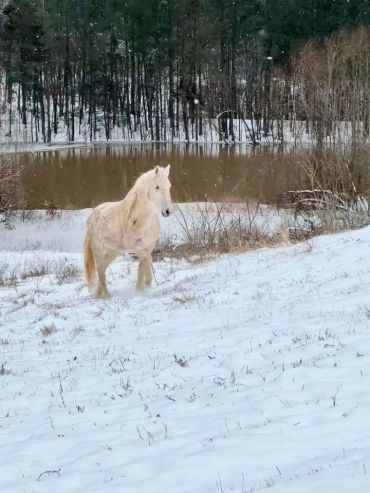
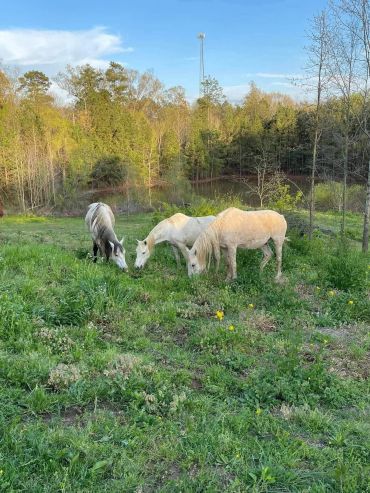
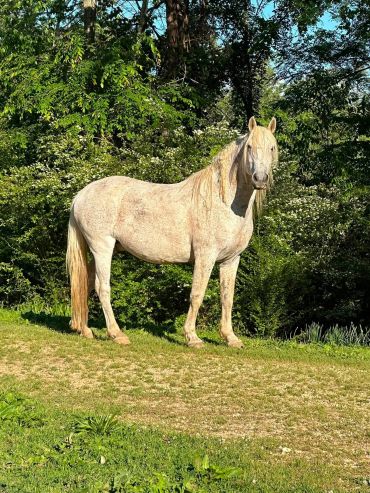
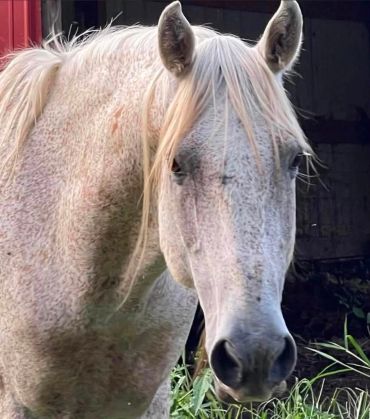
Logan's Story
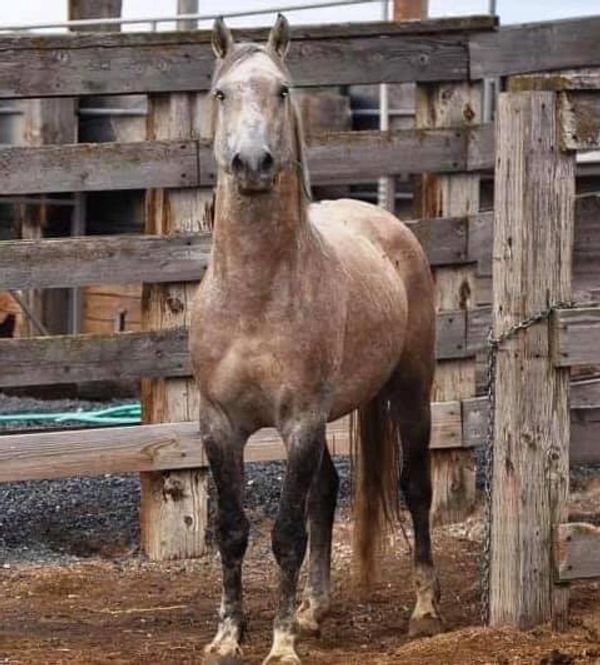
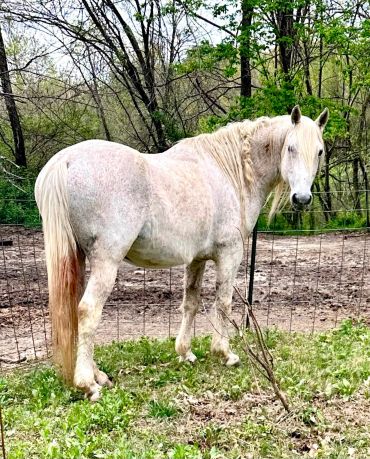
The Grey Lieutenant
Long before Logan ever came to Heart of the Wild, he had an entire life on Riddle Mountain in Oregon.
He was not simply another horse in a herd. He was a lieutenant stallion, a trusted second to another stallion, holding his place within the complex social world of the wild. He had mares of his own. He fathered foals. He fought when he needed to fight, watched when he needed to watch, and knew exactly who he was within the world that had formed him.
People who followed the mustangs of Riddle Mountain knew him, too. Logan had something of a following in the wild. He was recognizable. Remembered. One of those horses whose presence made people stop and pay attention. He was BEAUTIFUL & Magnificent.
His original adopters later named him Odin, perhaps because of his size, his strength, and the enormous presence he carried.
But even before there was an Odin, there was already a horse with relationships, history, offspring, responsibilities, alliances, and a place of his own. That matters. Wild horses do not enter captivity as blank slates. They leave behind a world.
Logan was eventually removed from Riddle Mountain HMA in part because of his color. He was not the dun coloration most closely associated with the Kiger horses and preferred for preservation within the herd. Had his gray carried the claybank or dun characteristics they were looking for, his story might have unfolded very differently.
Instead, he was simply gray. And something as arbitrary as color helped determine which life he was allowed to keep.
Once removed from the wild, the horse who had known exactly where he belonged entered a human world in which nearly every choice would be made for him.
His original adopters named him Odin. But by the time he finally came to me, there was very little about him that felt like the untouched, magnificent god of legend.
He was scarred. He was suspicious. He was battle-worn, carrying on his body the evidence of both the life he had survived in the wild and the terrible things that came afterward.
He did not feel like the great God of legend to me, he reminded me far more of Logan the Wolverine. A survivor. Scarred and damaged, certainly, but not defeated. His whole personality reminded me of the Wolverine, especially his disdain for humans. Scarred. Battle-worn. Wary. Fiercely alive. And so Odin became Logan.

What Humans Did
After Logan was removed from the wild, he was purchased by two young women and eventually sent to a trainer, and what happened there nearly killed him. He was starved, beaten, and ultimately abandoned. When he was finally found, he was in critical condition, with a body-condition score at the very bottom of the scale. He had suffered trauma to his head, face, and neck, broken teeth, and scars across his body.
Some of those scars belonged to the horse he had been in the wild, a 9 year old mature stallion who had fought other stallions, defended his place, competed for mares, and survived in a world where strength and judgment mattered. Others came from humans.
When Logan arrived at Heart of the Wild, he was untouchable.
He was not aggressive, and that distinction has always mattered to me.
He was not a biter or a kicker. His answer to fear was simply to leave.
He would bolt. He would run. He sought distance. When he became frightened, overwhelmed, or uncertain, his answer was to bolt and get away. Running had kept him alive. Why would he stop trusting it simply because someone told him he was safe now? And for a very long time, that was the only answer he trusted. There was no quick transformation. No miraculous moment when he suddenly understood that everything was safe.
He did not suddenly recognize that he had been “rescued” and become grateful, compliant, or easy to handle. Trauma does not disappear because the scenery changes. And a mature wild horse who had once lived according to his own instincts could not simply forget what humans had taught him about captivity.
It took years for Logan to decompress. Years.
I never asked him to become something other than he was. I simply gave him time, and I gave him space. And, most importantly, I gave him back something that had been taken from him again and again:
his sovereignty. The right to choose where he stood. The right to move away. The right to say no. The right to decide when — and whether — a human being entered his world.
I didn't measure his progress by the things domestic horses are expected to do. I never asked him if he would wear a halter, or whether he would lead. Whether he would tolerate strangers touching him. Whether he could be made into a horse who behaved the way people thought a horse should behave. Instead, I watched him, and I listened to him.
And slowly, the purpose of sanctuary became very clear.
Logan did not need us to turn him into something else.
He needed us to return something to him that captivity had stripped away again and again: his sovereignty. The right to choose where he stood, and the right to move away.
The right to exist without constantly being asked to surrender himself.
For Logan, sanctuary would not mean teaching him to submit more gently. It would mean learning how to care for him without taking away the last pieces of himself he had managed to protect.
The Choice to Trust
The greatest breakthrough between Logan and me did not happen during training. There was no halter. No rope. No lesson. No reward waiting in my hand.
It happened during grief after my husband died,
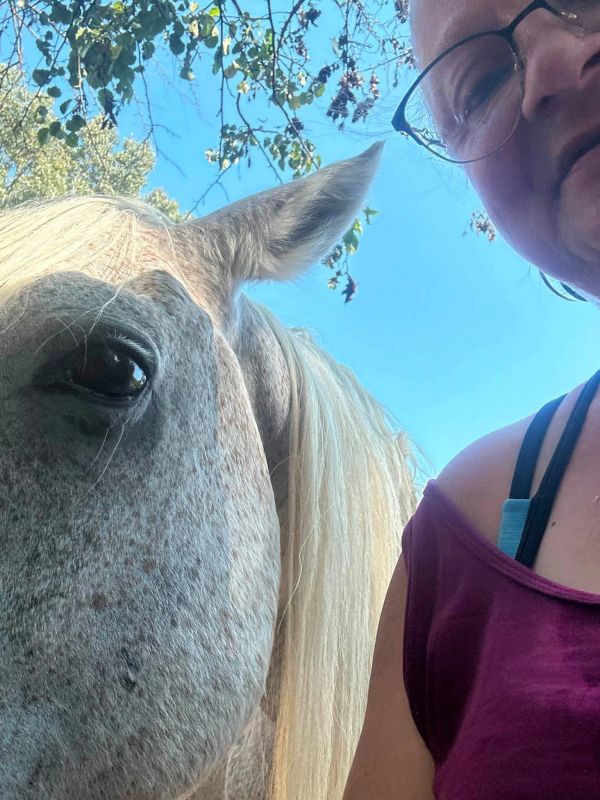
I was in Logan’s paddock one day when everything simply became too much. I put my head down. I closed my eyes. And I cried. There was nothing graceful or composed about it. I simply let everything go.
For once, I was not watching Logan. I was not thinking about where he was standing or what he might do. I was not asking anything of him. I was simply overwhelmed with the deep heart wrenching sadness & grief of losing my husband.
When I finally opened my eyes and looked up, Logan was standing right there in my space. The horse who had spent years making certain that humans stayed at a distance had crossed that distance himself so quietly I had not heard nor felt him.
He had come to me. I had not caught him. I had not persuaded him.
I had not trained him to stand beside me. He chose to be there.
He stood quietly while I cried, seeming to feel something in me that required no explanation, and then he allowed me to touch him.
I rubbed his face. I cried beside him. And this horse, who had every reason in the world to distrust human vulnerability, stayed. Something changed between Logan and I that day. Perhaps, in that moment, neither of us was asking the other to be anything other than what we were. I was grieving. He was wary. And somehow there was room for both.
We have been connected differently ever since.
Logan still does not live like a conventional domestic horse.
He does not wear a halter. He is not led around.
Other people cannot simply walk up and handle him.
And we no longer consider those things failures.
His veterinary and supportive care has to be adapted around what can safely be accomplished without frightening or retraumatizing him. When something can be given in his feed, we do it that way. We work with the horse who is actually standing in front of us rather than demanding that he become an easier one. Because Logan’s sanctuary is built around accommodation rather than domination.
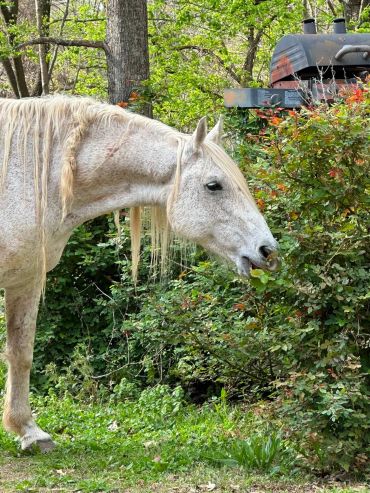
Today, he is given extraordinary freedom.
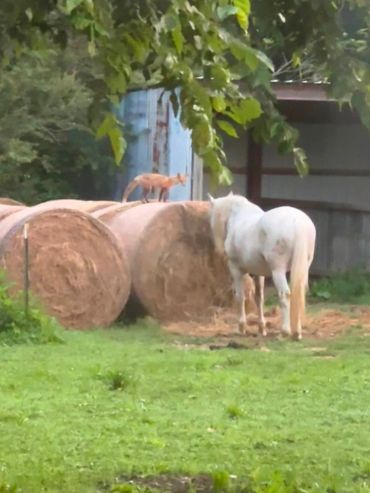
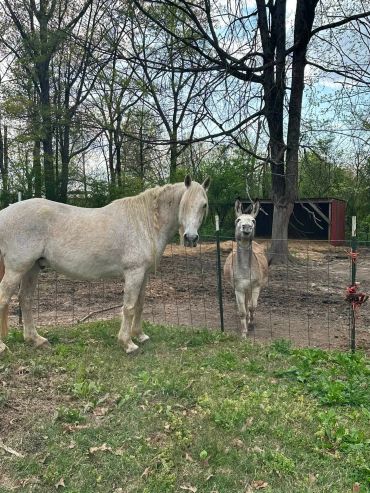
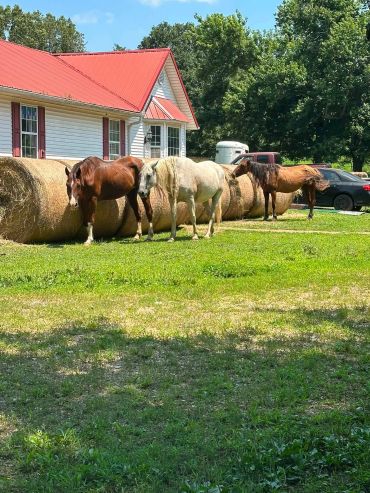
He roams the sanctuary. He comes up near the house. Sleeps in the front yard, lying down. He wanders by the chicken coops. He tolerates the other animals that share this place and seems to keep track of all of them. And he watches. He watches over the land. He watches over the other mustangs, donkeys, and ponies. He watches the wild animals who share the sanctuary with us. He notices movement. He notices danger. And he notices me.
There is still something of the lieutenant in him. Perhaps there always will be. He once watched over a life on Riddle Mountain HMA, and now he watches over this one. And among all the freedoms Logan has been given here, there is one choice that remains entirely his: he chooses me. He nickers for me. He allows me into places within himself that he closes to everyone else.
That trust cannot be commanded. It cannot be trained into existence.
It can only be given. And because Logan has been given the freedom to say no, his yes means everything. Heart of the Wild did not save Logan so that I could teach him to belong to people. I did not rescue a wild horse so that I could prove I could tame him. I gave him a place where he could stop defending himself long enough to remember who he was.
A place where survival could slowly become living.
A place where trust could be offered rather than taken.
A place where the horse who once had his own mares, his own offspring, his own standing within a herd, and his own place upon a mountain could once again make choices about his own life.
I gave him back what the wild had once given him naturally and captivity had taken away: Sovereignty. The freedom to belong to himself.
Heart of the Wild did not save Logan so that he could become the horse humans wanted him to be. It saved him so that, after everything he had endured, he could belong to himself again.
That is sanctuary.
That is sovereignty.
And that is Logan.